
The full list · 77 tricks
Hantis tricks
Hantis is all about creativity. Here is every trick in the game, sorted into the three types: serving tricks, striking tricks and dribble tricks, with the rules that keep each one legal.
Three types
Every trick is one of three kinds.
What makes a trick legal depends on when you do it: on the serve, during the rally, or on top of a dribble.
Serving tricks
7 tricks. Trick serves start the rally. Strike the ball onto your own table with any part of your body, then onto an opponent's table (2.0.2). Never throw it (2.0.1). See them all.
Striking tricks
59 tricks. Everything you do in the rally with your 2 hits: slams, no-look shots, Tweeners, kicks, headers, dives and team plays. Any body part counts as a hit (3.0.0). See them all.
Dribble tricks
11 tricks. Dribble on an opponent's table and every bounce resets your hit count, so you have time to set up a finish (3.0.3, 8.0.1). See them all.
The rules every trick follows
A trick is only a trick if it's legal. These are the rules that decide most trick calls.
- Two hits, one bounce. Each player gets 1 bounce on their table and 2 hits with any part of the body. A hit off your clothing counts (3.0.0). A third touch is out (4.0.0).
- Two hands together is two hits, even if only one hand touches the ball (3.0.4).
- Strike, don't carry. The ball may not be cupped, grabbed, held, caught or carried (4.0.4), and you can't trap it against a table (4.0.5). Freestyle is a little more relaxed: the Hand1 tricks, where the ball circles inside your shirt, are allowed there (8.0.2).
- X-Factors are neutral, but they don't reset your hit count (1.1.4).
- Non-contact. Slight contact while contesting the ball is fine; blocking a player isn't (7.0.0). Moving a table on purpose loses the point (7.0.1), except for Walking the Dog in Freestyle (8.0.2).
Serving tricks
A trick serve is any serve that isn't a plain hand strike. As long as you strike the ball onto your own table with any part of your body and then onto an opponent's table, it's legal (2.0.2). You may toss the ball up first, but you may never throw it as the serve, strike it straight onto an opponent's table, or serve to your teammate's table (2.0.1). Serve from behind the back of your table (2.0.0).
The same fault rules apply to trick serves. In Freestyle you get 1 fault each time you serve, and 2 faults is out (2.2.0). In Competitive a missed serve is the other team's point, except at set point or match point down (2.2.1).
Basic trick serves
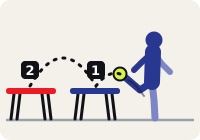
The rulebook names five trick serves. Toss or drop the ball first, then strike it: the strike is the serve. Kick serve: toss it up and kick it down onto your table. Elbow serve: drive it down with the point of your elbow. Header serve: toss it to about forehead height and head it down. Tweener serve: jump with your legs wide, let the ball drop from one hand and strike it between your legs with the other. Scissor-kick serve: see below.
Holler Back Serve
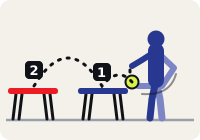
A serve struck from behind your back. Stand side-on to your table with the ball in your off hand, let it drop, and swing your strong hand around behind your back to strike it down onto your own table. It comes in quicker and lower than a normal serve. Ace someone with it and invite them to "holler back" on their way to the end of the line.
Also called: Holler-Back Serve · Rules: 2.0.2
Sparta Kick
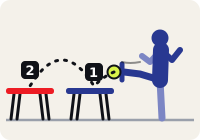
A high front kick. Stand about 3 feet back from your table and toss the ball up in front of you. Bring your knee up high, then drive your leg out forward and down and kick the ball onto your own table with the flat sole of your shoe, never the toe. It works in a rally too: pop the ball up to yourself and kick it straight onto an opponent's table. Shouting "This is Hantis!" is optional but encouraged.
Scissor Kick Serve
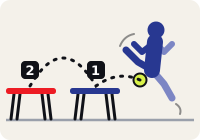
Scissor-kick both legs into the air and, while you're airborne, serve the ball fast and low between your legs. Your opponent is still admiring the kick when the ball arrives.
Rules: 2.0.2
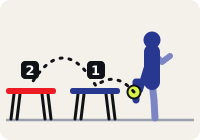
Horseman
A variation of the Tweener serve. Raise one knee in the air with that leg bent at 90 degrees, then strike the ball between your legs onto your own table and on to an opponent's. Served fast and low, it's a sneak serve that leaves a trail of fire.
Also called: The Horseman · Rules: 2.0.2
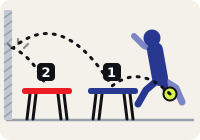
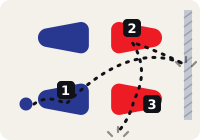
Double Mongoyo
A MonGoyo that comes off the X-Factor and bounces on both opponents' tables, uninterrupted, before it hits the ground. That's a Double off the serve: both opponents out in Freestyle, 2 points in Competitive.
Rules: 4.0.7
Striking tricks
Striking tricks are everything you do once the ball is in play. Each player gets 1 bounce and 2 hits, with the hands, feet, knees, head or anything else (3.0.0). Use your hits to their full advantage: trick shots with your head or feet, between-the-legs shots, and set plays with your teammate (8.0.0). Passing to your teammate uses your hits, then they finish (3.0.1).
Strikes, slams and shots
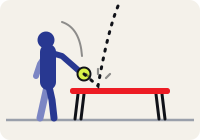
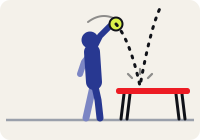
Back Slam
A Slam with your back to the opponent's table: slam the ball from overhead without looking. Keep practicing it and you'll build table awareness, a feel for where every table is.
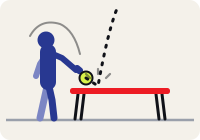
Back Hand Slam
A Slam with a powerful overhand slap from the back of your hand, sending the ball rocketing off your opponent's table.
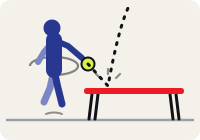
360 Slam
Spin a full 360, on the ground or in mid-air, then finish with a Slam.
Also called: 360 Hop
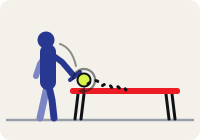
Back Hand Chop
Chop down hard at the underside of the ball with the back of your hand to give it heavy backspin. Done right, it skitters across the opponent's table before they can react. Ping-pong players love it.
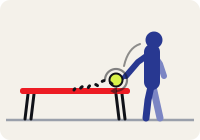
Under Chop
The Back Hand Chop, but with the front of your hand.
Also called: Under-Chop
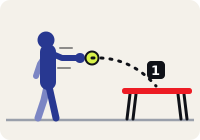
Punch
Use one of your two hits to punch the ball forward with a closed fist. Simple, unless it's fast as lightning.
Rules: 3.0.0
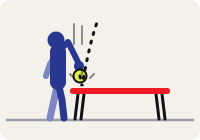
Hammer
Like the Punch, but you strike the ball down with the bottom of your fist.
Also called: The Hammer, Hammer of Thor
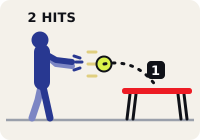
Ally-Yukin
Put your wrists together with your fingers spread and strike the ball with both palms at once, like a fireball blast in a fighting game. Two hands together use both your hits, so make it count, and shout "Ally-Yukin!"
Also called: Allayukin · Rules: 3.0.4
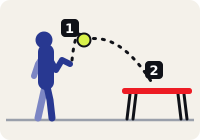
Canadian Cobra
A bare-bones two-hit return. With your first hit, pop the ball up to yourself with the back of your hand, wrist coiled like a cobra. With your second, strike it hard toward an opponent's table.
Also called: The Canadian Cobra · Rules: 3.0.0
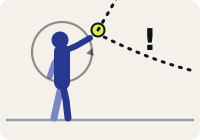
Bang-A-Rang
Usually done by a beginner trying to pick up a very fast serve: the arm swings in a big full-length circle and launches the ball sky high. If you see one, shout "Bang-a-rang!"
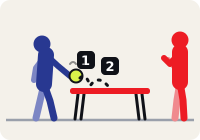
Kiss of the Dragon
When opponents back far off their table expecting a Slam, their table is wide open. Touch the ball gently onto it so it bounces twice right away. The softest kill shot in Hantis.
Also called: KOTD · Rules: 4.0.1
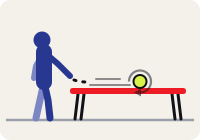
Table Roll
Hit the ball with just the right spin, angle and touch that it rolls along the opponent's tabletop instead of bouncing.
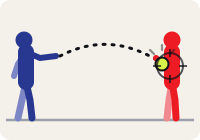
Snipe Shot
Either a long-distance shot that lands perfectly on a table, or a shot that hits an opponent instead of their table. If it hits them and then the ground, they're out. The ultimate Snipe Shot does both from a long way off.
Rules: 4.0.3
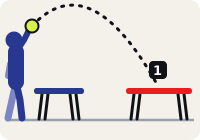
High Shot
A very long lob from far behind your own tables that comes down on an opponent's table.
Behind the back and no-look
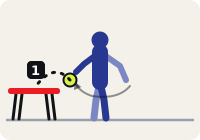
Around The Back
Like the Reverse Tuck, but with your arm extended away from your body. Throw in a 180 or 360 spin so your opponent has no idea where the ball is going.
Also called: Behind The Back
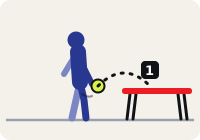
Reverse Tuck
A sneaky one. With your arm down at your side, use a low strike to hit the ball behind your back and onto an opponent's table. Tuck it away.
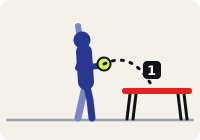
Side Hook
With your back to an opponent's table, strike the ball with one hand underneath your other arm. Your body hides the ball, so they rarely see it coming. Add a 180 or 360 to mislead them even more.
Also called: Sidehook
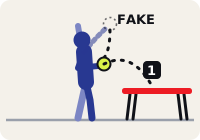
Cross Fake Side Hook
With your back to their table, swing at the ball as it drops from overhead as if you're hitting it over your shoulder. When your opponent steps back for the Slam, let the ball drop under your arm and finish with a fast Side Hook.
Also called: Crossfake Sidehook
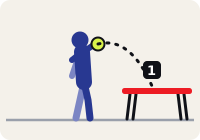
Over the Shoulder
Like the Side Hook, but you hit the ball above your other arm, between your neck and shoulder. A good no-look trick for building table awareness.
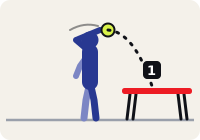
Nectarine
A skilled, tasty no-look shot. With your side to the opponent, strike the ball behind your own head and across your shoulders toward their table. It arrives at an angle they're not ready for.
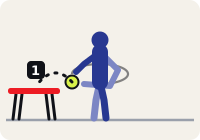
360 Strike Behind-The-Back
Spin a full 360 and strike the ball behind your back onto an opponent's table as you come around.
Also called: 360 Raymer
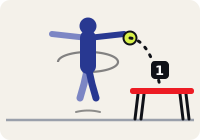
Back-Side Eagle
Jump and spread your arms wide like an eagle's wings, hold the pose through a full 360 in the air, and strike the ball as you come back around.
Also called: 360 Backside Eagle
Between the legs
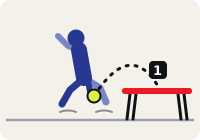
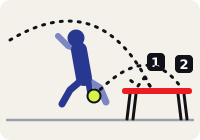
Rising Saddle Tweener
A power combo. Open with a Griffin that sends the ball up onto the opponent's table, pick it up with a dribble, then hit it up again and finish with a Tweener.
Rules: 3.0.3
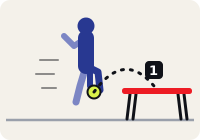
Griffin
While running at an opponent's table, jump off one leg and, with your side to the table, hit the ball between your legs in mid-air.
Also called: Gryphon
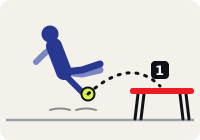
Air Wrangler
An advanced Griffin. Run alongside the opponent's table, knock the ball up to yourself, kick both feet high out in front of you and slam the ball under both legs. It takes some serious air time.
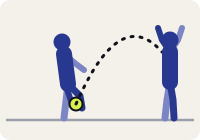
Boyo
Reach your arm under and behind your leg and hit the ball up between your legs from below your waist, with one foot still on the ground. Like the Griffin, but usually used as a pass to your teammate.
Also called: The Boyo · Rules: 3.0.1
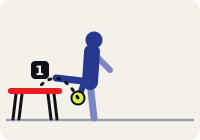
Kevin Nash
Named after the pro wrestler's finishing move. With one foot on the ground, raise the other leg high enough to hit the ball down between your legs onto an opponent's table.
Also called: The Kevin Nash
Kicks and knees
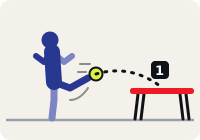
Kick McNasty
The martial-arts and soccer kick: power through the ball with the top of your foot. It's faster than any other kick and can go in any direction, which makes it very hard to return.
Rules: 3.0.0
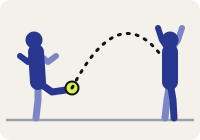
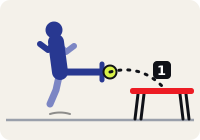
Side Kick
Like the Sparta Kick, but with your toe pointing left or right instead of up. Come in like a ninja, jump, turn your foot sideways and power through the ball in the air.
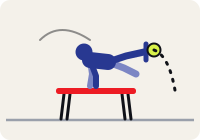
Falcon Kick
A Topper Harley and a Side Kick in one: dribble, hit the ball up to yourself, plant your hands and vault over the table, and side-kick the ball on your way over.
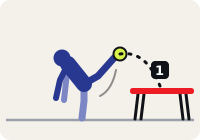
Heel Kick
Kick back like a startled horse, heel to the sky, and send the ball onto their table.
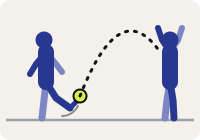
Whip Kick
For hacky-sack players: get your foot under the ball and whip your ankle forward so your toes pop it up. Usually a last-ditch save that lobs the ball to your partner, but with the right power it's a kill shot.
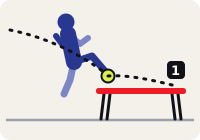
Toe Slam
Take a pass from your teammate and, in one hit, jump up and slam the ball down onto the opponent's table with your toe. Land it near the edge so it's hard to return.
Rules: 3.0.1
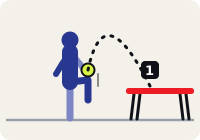
Knee Pop
Pop the ball up with your knee, as a pass to your partner or a long shot at the opponent's tables. Great for soccer players who are more comfortable with knees and feet than hands.
Rules: 3.0.0
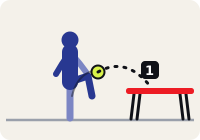
Knee Swing
A more aggressive Knee Pop: strike the ball with your knee from the side or over the top onto the opponent's table. Very effective for ending a dribble.
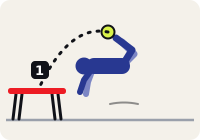
Standing Scorpion Kick
Jump horizontally and curl both legs up behind you to hit the ball.
Headers, chest, elbows and shirt
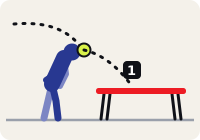
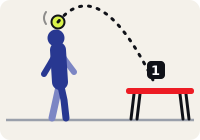
Rhino Header
Head the ball upward, as a lob pass to your partner or a high arcing shot onto an opponent's table.
Rules: 3.0.0
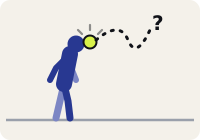
Off The Face
Peck at the ball with your face like a bird. Usually an accident while you're learning headers, and always a crowd-pleaser.
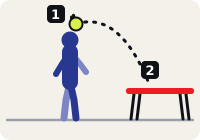
Double Header
Use both your hits as headers: pop the ball up off your head, then send it off your head onto an opponent's table.
Rules: 3.0.0
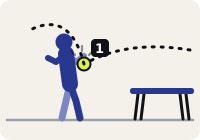
Chesty
Drop low and stop a fast serve with your chest, then send it to your partner with your second hit. Or have your partner stand right beside the opponent's table for some Chesty target practice.
Also called: The Chesty · Rules: 3.0.0
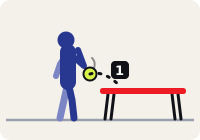
Bow Drop
Any successful play on the ball with your elbow. The proper celebration is slapping your elbow like an old-school pro wrestler.
Rules: 3.0.0
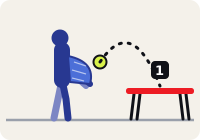
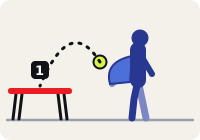
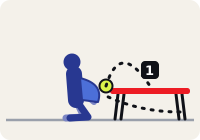
Dives and table moves
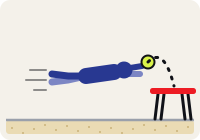
Superman
Sell out with a diving play, flat out and parallel to the ground at about table height. Sand courts are made for this.
Also called: The Superman · Rules: 1.1.0
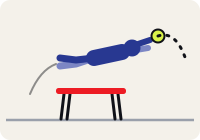
Over-Table Dive
Launch yourself across a table to reach the ball and play it before you land.
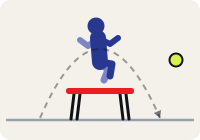
Topper Harley
Jump right over a table to get to the other side, so you can keep the play going and set up an easier point.
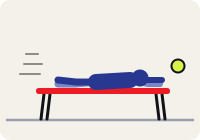
Penguin Slide
A belly slide across the table.
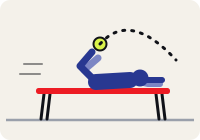
Sliding Scorpion Kick
A Penguin Slide and a Standing Scorpion Kick combined.
Team plays
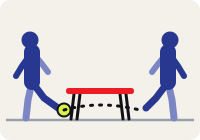
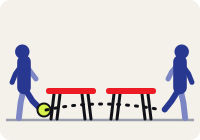
Double Underdog
An extension of the Down Under and one of the first team tricks ever. Dribble on an opponent's table from the outside lane while your partner moves around the far side. Use one hit to drop the ball below the table and the second to send it under both tables. Your partner pops it up and strikes it onto the opponent's tabletop.
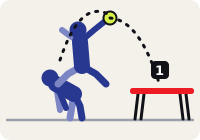
Leap Frog
The receiver uses one of their two hits to pass the ball up the middle. Their partner sets it to themselves, then hits it straight up as an alley-oop. The receiver leapfrogs over them and uses their second hit to slam it onto either opponent's table in mid-air. Count carefully: a third touch is out.
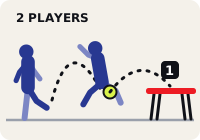
The Shocka
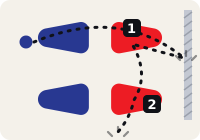
Named for the surfer hand signal you flash to call it. The player at table 1 picks up the serve with their first hit to the left of their table, lets it drop to their foot and Whip Kicks it 4 to 5 feet up. Their partner runs up the middle, out to the far left lane, and jumps for a one-time Tweener. A sequence trick.
Also called: Shocka · Rules: 3.0.1
Top Shelf
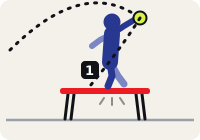
The player at table 1 receives the serve, sets it high to buy time, then sends it high and left of the server's table. Their partner sprints across, plants a foot on the server's table to launch high into the air, and slams the pass down onto that same table.
Rules: 3.0.1
Double points
Dribble tricks
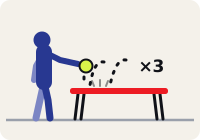
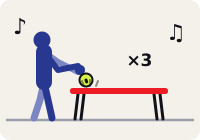
Dribbling is bouncing the ball off the other team's tables again and again. Possession changes after every bounce and hit, so you can dribble indefinitely, and your hit count resets every time (3.0.3). That's why the dribble is the best setup for a trick shot: more time to prepare, right up close to their tables (8.0.1). The players being dribbled on can try to intercept at any time. Three dribble tricks, marked Freestyle only, are allowed in Freestyle but not in Competitive play (8.0.2).
Gangnam Dribble
Dribble with one fist while your wrists are crossed and bent toward the table, like the Gangnam Style dance. Slam the last bounce hard and, while the ball heads for the rafters, finish the dance with a gallop and a fist held high. Best with music.
Also called: Gungdam Dribble · Rules: 3.0.3
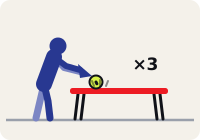
Praying Hantis
Dribble hard on an opponent's table. As the ball comes back up, press your hands together palm to palm, fingers straight up, and slam it back down with the back of one hand. Then bow like an honorable ninja. Two hands together count as two hits, but that's fine here: every bounce on their table resets your count.
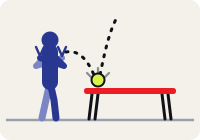
The Juza
A finisher to spice up the end of a dribble. Cross your arms, forearms close together, with both hands throwing up peace signs, and make the final slam with one of the extended fingers. Hold the pose while your opponent heads to the back of the line.
Also called: Juza · Rules: 3.0.3
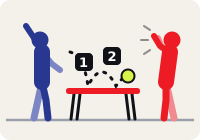
The Flincher
Dribble until your opponent comes in to intercept. Bounce it once a little harder and wind up like you're about to spike it, then swing at nothing but air. The ball bounces on their table a second time, and the play is over. Never hit the player.
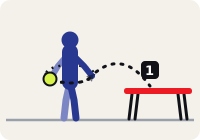
Hand1
One of the flashiest tricks in the game, usually pulled off at the end of a dribble. Bounce the ball off an opponent's table up into your own shirt. As it reaches the underside of your shirt, strike it from the side so it travels all the way around your body inside the shirt, then falls out back onto their table so fast it makes their head spin. Freestyle only: the ball rolls inside your shirt, which Competitive play counts as a carry.
Freestyle onlyAlso called: Hand-1 · Rules: 3.0.3 · 4.0.4 · 8.0.2
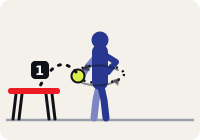
Reverse Hand1
A Hand1 with a twist, first pulled off in Kalgoorlie, Australia. Dribble the ball up into your shirt and strike it from the side to send it around your body. Before it comes out the other side, hit it back the opposite way with the elbow of the same arm, so it exits on the side it went in. Freestyle only, for the same reason as the Hand1.
Freestyle onlyAlso called: Reverse Hand-1 · Rules: 3.0.3 · 4.0.4 · 8.0.2
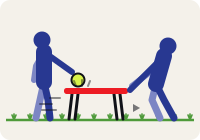
Walking the Dog
A team trick for Freestyle only. As you dribble on an opponent's table, your partner grabs that same table and drags it away so they can't get to it: the most extreme form of keep-away. Everyone in line usually bursts out laughing the first time they see it. In Competitive play, moving a table on purpose loses the point. Only play it on grass, sand or another surface a table can't damage: dragging a table across a gym floor can scratch it.
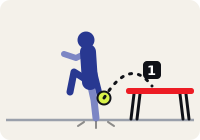
Sumo
Like the Kevin Nash, but with your back to the opponent's table. After a dribble, set the ball up to yourself, lift one leg as high as you can like a sumo wrestler, slam the ball between your legs onto their table, and land with a hard stomp in a wide stance. Slap both knees to finish.
Also called: The Sumo, Sumo Slam · Rules: 3.0.3
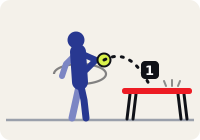
The Frizzell
Dribble on an opponent's table, pop the ball behind your back, then spin and strike it with your elbow back onto their table.
Rules: 3.0.3
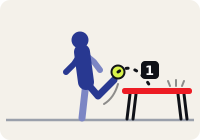
Heel Snap
Dribble the ball up and hit it up to yourself, close enough that you can whip your foot around behind you and snap the ball off your heel onto their table.
Rules: 3.0.3
Watch
See the tricks.
Two short how-to episodes: trick shots in the rally, and trick serves. More videos.
Questions
Hantis tricks FAQ
What are the three types of Hantis tricks?
Serving tricks are trick serves, struck onto your own table and then an opponent's with any part of your body. Dribble tricks start with a dribble on an opponent's table, where every bounce resets your hit count. Striking tricks are everything else you do in a rally with your two hits: slams, behind-the-back shots, Tweeners, kicks, headers, dives and team plays.
Are trick serves legal in Hantis?
Yes. As long as you strike the ball onto your own table with any part of your body and then onto an opponent's table, it's a legal serve (rule 2.0.2). You may never throw the ball as a serve (rule 2.0.1), and a missed trick serve is a fault like any other.
Can you use your feet, head or shirt in Hantis?
Yes. You can hit the ball with your hands, feet, knees, head or anything else, as long as you only hit it twice. A hit off your clothing counts as one of your hits (rule 3.0.0). Holding or carrying the ball is out (rule 4.0.4). The one exception is Freestyle, where the Hand1 and Reverse Hand1 send the ball around your body inside your shirt (rule 8.0.2).
What is a Tweener in Hantis?
A Tweener is a strike between your legs: you jump with your back to an opponent's table and hit the ball below your waist, between both legs. It's legal anywhere as long as you stay within your two hits.
Why dribble before a trick shot?
Every bounce on an opponent's table changes possession and resets your hit count (rules 3.0.3 and 8.0.1). Dribbling buys you time to set up a trick, and you're right up close to their tables when you do it.
Are some Hantis tricks only allowed in Freestyle?
Yes. Freestyle is a little more relaxed than Competitive play. The Hand1 and Reverse Hand1, where the ball travels around your body inside your shirt, and Walking the Dog, where your partner drags an opponent's table away during a dribble, are allowed in Freestyle only (rule 8.0.2). In Competitive play they break the carry rule (rule 4.0.4) and the table rule (rule 7.0.1).
What is a Double in Hantis?
A Double happens when one strike bounces on both opponents' tables without interruption and then hits the ground. In Freestyle both opponents are out; in Competitive it's worth 2 points (rule 4.0.7).
Ready to try them?